
ERP guide
HR and Payroll Software Egypt Guide: WPS, Gratuity and Compliance
In this guide
- Who must use WPS and who does not
- How a payroll system in Egyptian companies works, month by month
- Inside the WPS salary file (SIF)
- WPS payroll cards for unbanked staff
- End-of-service gratuity: how software should calculate it
- Leave types and how they affect payroll
- Documents, visas and expiry alerts
- Why integrated HR and payroll software beats spreadsheets
- Choosing HR and payroll software Egyptian businesses can rely on
- Rolling out a new payroll system step by step
- Common mistakes
- FAQ
- Conclusion
Choosing HR and payroll software in Egypt is less about payslip design and more about getting three things right every month: a valid WPS salary file, correct leave and gratuity accruals, and a clean journal into your accounts. This guide explains how each works, what the software should automate, and how to roll out a system without a messy first payroll, whether you are on the mainland or in a free zone.
Key takeaways
- Mainland employers registered with the Ministry of Labour must pay salaries through the Wage Protection System (WPS). Your software should generate the Salary Information File (SIF) automatically, not via a spreadsheet macro.
- End-of-service gratuity is calculated on basic salary, so your pay structure (basic vs allowances) decides your long-term liability. The system should accrue it monthly.
- Leave, unpaid absence and probation status all feed gratuity and final settlements. Keep them in one system, not three.
- Payroll cards let you pay staff without bank accounts through WPS. Your software must handle card numbers and agent routing codes alongside IBANs.
- Document expiry tracking (visas, Governorates IDs, labour cards, insurance) is a compliance feature, not a nice-to-have.
- Integration with accounting removes the most common month-end error: payroll totals that do not match the general ledger.
Who must use WPS and who does not
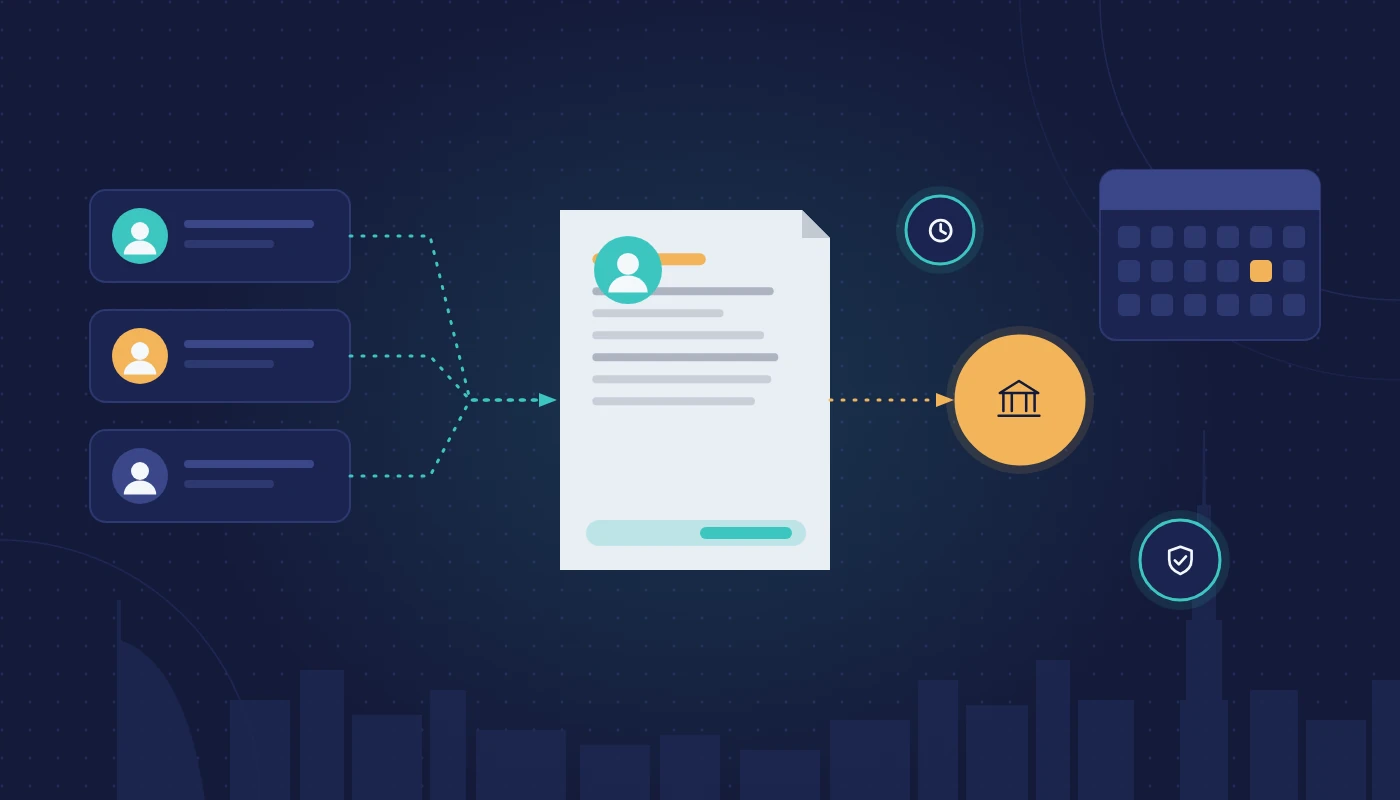
The Wage Protection System is run by the Ministry of Labour (the Ministry of Labour). It was introduced so the ministry can see that workers are paid the right amount, on time, through regulated channels. Salaries go from the employer to an approved WPS agent (a bank or licensed exchange house), which passes the data to the Ministry of Labour and credits each employee’s account or card.
Mainland companies
If your establishment is licensed on the mainland and your staff hold the Ministry of Labour work permits, WPS applies to you. Late or missing WPS payments can lead to fines, a block on new work permits and escalation for repeat cases. Under the Labour Law, wages are generally treated as late if they are not paid within 15 days of the due date.
Free zone companies
Most free zones run their own employment registration, and many are outside the Ministry of Labour’s WPS. Some free zone authorities still expect salaries to be paid through a bank and may ask for evidence, and a few have their own wage monitoring rules. special economic zones have their own employment laws entirely, and Smart Village replaced traditional gratuity with the DEWS savings scheme for most employees.
That is why a business running HR and payroll software in Cairo across two entities (say, a mainland trading licence plus a the SCZone or DMCC company) needs a system that can handle different rules per company: WPS for one, plain bank transfers for the other, and possibly different gratuity treatment.
How a payroll system in Egyptian companies works, month by month
A well-run payroll system in Egypt follows the same cycle every month. The software’s job is to make each step quick and auditable.
The monthly cycle
- Cut-off. Attendance, overtime, leave and unpaid absence are locked for the period.
- Variable inputs. Commissions, bonuses, deductions and loan instalments are added.
- Calculation. Gross, deductions and net pay per employee, plus gratuity and leave accruals.
- Review. HR and finance investigate large variances against last month.
- SIF generation and release. The WPS file is uploaded to the agent, the account is funded and salaries are credited.
- Accounting. A payroll journal posts to the ledger by cost centre.
- Payslips. Issued through self-service, ideally in English and Arabic.
Pay structure matters
Egyptian salaries are usually split into basic plus allowances such as housing, transport and phone. The split is not cosmetic. Gratuity and several leave payments are calculated on basic salary, so the structure in your contracts has a direct effect on long-term liabilities. Good software stores each component separately and lets you mark which ones count towards gratuity, leave pay and overtime.
Overtime
The law sets overtime premiums, higher for night hours and rest days. The system should apply the right multiplier per type and respect daily caps.
Inside the WPS salary file (SIF)
The Salary Information File is a fixed-format text (CSV-style) file that you upload to your WPS agent. Get one field wrong and the whole file, or that employee’s line, can be rejected.
What the file contains
| Record | What it holds | Where the data comes from |
|---|---|---|
| Employee Detail Record (EDR) | One line per employee: the Ministry of Labour personal (labour card) number, agent routing code, IBAN or card number, pay period start and end, days paid, fixed pay, variable pay, days of leave | Employee master, bank details, payroll run |
| Salary Control Record (SCR) | One line per file: employer establishment ID, routing code of the employer’s bank, file creation date and time, salary month, number of EDRs, total salary, currency | Company setup, payroll totals |
Exact formats follow the Ministry of Labour and Central Bank WPS specification. Test a sample file with your bank before go-live.
Where SIF files go wrong
- Wrong personal number. The the Ministry of Labour personal number is not the National ID number. Mixing them up is the single most common rejection.
- Mismatched totals. The control record’s total must equal the sum of the employee lines to the fils.
- Stale bank details. An employee changed banks but HR was not told.
- Manual edits. Excel can strip leading zeros from account numbers. Upload the system file untouched.
WPS payroll cards for unbanked staff
Not every employee has a bank account. Many blue-collar and junior staff, especially new arrivals, are paid through a WPS payroll card: a prepaid card issued by a bank or exchange house that is linked to the employee’s the Ministry of Labour record.
How payroll cards work
The employer opens a payroll card arrangement with an agent. Each employee gets a card with an account or card reference number. In the SIF, that reference replaces the IBAN and the agent’s routing code is used. Once salaries are released, employees can withdraw cash at ATMs, pay by card and, with some providers, send money home through an app.
What your software must support
- Separate payment methods per employee (IBAN, payroll card, or cheque/cash for exceptional cases where allowed).
- Multiple agents in one month, for example most staff via your main bank and site workers via an exchange house, with a separate SIF per agent.
- Tracking card issue and closure, so a leaver’s last salary reaches a card they still hold.
For a 300-person facilities company in 6th of October City, this decides whether payroll takes two hours or two days.
End-of-service gratuity: how software should calculate it
Gratuity is the lump sum owed to eligible employees when employment ends. For mainland employees under the federal law, the general rule is:
- Eligibility after one year of continuous service for full-time staff.
- 21 days’ basic wage for each of the first five years.
- 30 days’ basic wage for each year after five.
- A total cap of two years’ wages.
- Calculated on the last basic wage, with unpaid absence days excluded from service.
Under the 2021 law, the old reductions for resignation were removed for limited and unlimited contracts alike, now that all contracts are fixed-term. Part-time and free zone staff may follow different rules, and an alternative voluntary end-of-service savings scheme has been introduced for private-sector employers who opt in.
Accrual vs settlement
Your software should do two separate jobs:
- Monthly accrual. A provision is posted every month so the balance sheet reflects the true liability. Auditors and the Corporate Tax return both rely on this.
- Final settlement. When someone leaves, the system calculates the actual payable amount, adds unused leave encashment, notice pay and any other dues, subtracts recoverable amounts (loans, advances) and produces a settlement statement for the employee to sign.
Before go-live, ask the vendor to show the working for a few test cases: 11 months’ service, exactly five years, eight years with a mid-service raise, and someone with unpaid leave.
Leave types and how they affect payroll
Egyptian leave rules feed directly into payroll, gratuity and final settlements. The main entitlements for mainland private-sector employees are summarised below. Free zones and company policies can be more generous, and some entitlements have conditions.
| Leave type | Typical entitlement under federal law | Payroll effect |
|---|---|---|
| Annual leave | 2 days per month after 6 months’ service; 30 calendar days per year after one year | Paid at basic plus housing in some interpretations; unused leave encashed on exit at basic |
| Sick leave | Up to 90 days per year after probation: 15 full pay, 30 half pay, then unpaid | Pay reduces in stages; system must track days used per year |
| Maternity leave | 60 days: 45 full pay, 15 half pay, with additional unpaid options in specific cases | Pay split across two rates |
| Parental leave | 5 working days within six months of birth | Fully paid |
| Bereavement | 5 days (spouse); 3 days (parent, child, sibling, grandparent) | Fully paid |
| Study leave | 10 working days per year for eligible employees | Fully paid |
| Unpaid leave | By agreement | Excluded from gratuity service and pay |
What to look for in the leave module
Rules should be configuration, not code: accrual rate, probation behaviour, carry-forward, encashment and public holidays (which shift with lunar dates). Employees should apply from a phone, and Ramadan hours should flow into attendance and overtime.
Documents, visas and expiry alerts
In Egypt, HR teams spend a surprising share of their time chasing renewals. An employee with an expired visa, National ID or labour card is a compliance problem, and an expired health insurance card can leave staff without cover.
Documents to track per employee
☐ Passport (number, issue and expiry dates)
☐ Residence visa and entry permit
☐ National ID
☐ the Ministry of Labour work permit / labour card and contract
☐ Health insurance card and policy dates
☐ ILOE unemployment insurance status
☐ Driving licence and vehicle permits (for drivers)
☐ Professional licences (MOHP/DOH for healthcare, engineering registrations, trade certifications)
☐ Educational certificate attestations where needed for visa class
Alerts and workflows
Set alerts at 90, 60 and 30 days before expiry. Better systems open a renewal task automatically and record the new expiry once renewed. For Egyptian nationals, the system should also hold pension registration details and the contribution basis used by GPSSA or the Alexandria Pension Fund, and for larger companies support localisation reporting.
Why integrated HR and payroll software beats spreadsheets
Excel payroll beside separate attendance and accounting tools works at 20 people. At 80, it breaks.
What “integrated” actually means
Integrated HR and payroll software keeps the employee record, attendance, leave, payroll, gratuity and documents in one database, and posts directly to accounting. A change in one place (say, a salary revision effective mid-month) flows through to pro-rated pay, gratuity accrual and the ledger without anyone copying numbers.
There are two common routes:
- HR and payroll inside an ERP. The module shares employees, departments, cost centres and approvals with finance, purchasing and projects. Our overview of ERP software in Egypt explains how these modules fit together.
- A standalone HR system integrated with your accounts. Useful when finance is already settled on a package and you only need HR. The integration must be reliable, with payroll journals mapped to your chart of accounts in your accounting software (Egypt).
The accounting link
Whichever route you choose, insist on these outputs: a payroll journal by department and cost centre; separate liabilities for net salaries, gratuity provision, leave provision and employee loans; and a reconciliation report between the WPS file total and the bank debit. Salaries and end-of-service provisions are generally deductible for Egypt Corporate Tax, subject to the usual rules, so clean records help at return time. For more on the finance side, see our guide to VAT-compliant accounting software.
Choosing HR and payroll software Egyptian businesses can rely on
When you shortlist HR and payroll software in Egypt, the Egypt-specific features matter more than the generic HR feature list. Most systems can store employee records; far fewer can produce a SIF your bank accepts first time.
Must-have features
☐ WPS SIF generation for each agent, tested with your bank
☐ Payroll card support alongside IBAN payments
☐ Gratuity accrual and settlement under federal law, with configurable rules for free zone entities
☐ Egyptian leave types and public holiday calendar
☐ Multi-company and multi-entity payroll (mainland plus free zone)
☐ Document and visa expiry alerts
☐ Arabic and English payslips and letters
☐ Employee self-service on mobile
☐ Payroll journal posting to your general ledger by cost centre
☐ Role-based access, so only authorised staff see salaries
☐ Audit trail of every change to pay data
Nice-to-haves include geo-fenced mobile attendance, recruitment, appraisals and expense claims.
Platform options
ERP suites such as Odoo ERP include HR, attendance, leave and payroll modules, with Egyptian payroll localisation and WPS export available in recent Enterprise versions. Specialist Egypt HR systems also exist, and some businesses outsource payroll entirely. If you are comparing routes for HR payroll in Cairo, our HRMS software Cairo page sets out the options we implement and how they connect to finance.
Cost model, not price
Most cloud HR systems are licensed per employee or per user per month, while ERP suites usually charge per user (often only for staff who log in, not for every employee on payroll). Factors that drive the total include headcount, number of entities, attendance hardware, integrations, data migration and ongoing support. Ask for a written breakdown of each.
Rolling out a new payroll system step by step
A payroll go-live has no margin for error: staff notice instantly if their salary is wrong. Follow a structured plan.
Step 1: Document your current rules
List every pay component, overtime rule, leave policy and gratuity treatment per entity, including unwritten exceptions.
Step 2: Clean the employee master data
Check the Ministry of Labour personal numbers, IBANs, card numbers, joining dates, basic salary history and leave balances. Joining dates and unpaid leave history drive gratuity, so errors here become expensive liabilities later. Specialist ERP data migration services help when records are spread across spreadsheets and an old system.
Step 3: Configure and test
Set up salary structures, leave rules and WPS settings. Run a sample SIF through your bank’s validation tool before anything else.
Step 4: Run parallel payrolls
Run at least two months in both old and new systems and compare every employee line. Investigate every difference, even small ones.
Step 5: Train HR, finance and managers
Short role-based sessions work better than one long demo.
Step 6: Go live and hold back support
Go live at the start of a month, not mid-cycle. Keep your implementation team on hand for the first two payroll runs. An experienced ERP implementation company will plan this hypercare period from the start. Our ERP implementation guide covers the wider project steps.
If you do not have in-house capacity
Smaller companies sometimes keep the software but outsource the monthly processing or system administration. IT outsourcing services can cover system administration, user management and updates, while your HR team keeps control of pay decisions.
Common mistakes
- Treating the SIF as an afterthought. Teams test payslips but not the WPS file, then hit rejections on salary day.
- Shrinking basic salary without legal advice. It lowers gratuity on paper but invites disputes.
- Not accruing gratuity monthly. A large unexpected settlement hits cash flow.
- Migrating balances without history. Leave balances without joining dates and unpaid leave history break gratuity.
- One rule set for every entity. Mainland, free zone and special economic zones staff may need different rules.
- Shared admin logins. Every pay change should trace to a named user.
- Skipping the parallel run. It is the cheapest insurance against a bad first payroll.
Frequently asked questions
Is WPS mandatory for all Egyptian companies?
WPS is mandatory for establishments registered with the Ministry of Labour, which covers most mainland private-sector employers. Many free zone companies are outside the Ministry of Labour’s WPS but may have their own requirements. Check with your licensing authority.
What is a WPS payroll card?
A WPS payroll card is a prepaid card issued by a bank or exchange house that receives salary through the Wage Protection System. It lets employers pay staff who do not have a bank account while still meeting WPS rules.
Can HR and payroll software in Cairo handle both mainland and free zone entities?
Good systems can. Look for multi-company support with separate payroll rules, WPS settings and gratuity treatment per entity, plus consolidated reporting across the group.
How is gratuity calculated in a payroll system in Egypt?
The system multiplies the employee’s last basic daily wage by 21 days for each of the first five years and 30 days for each year after, excluding unpaid absence, and caps the total at two years’ wages, in line with the federal law. It should also accrue the liability monthly.
Does gratuity include housing and transport allowances?
Under the federal law, gratuity is based on basic wage, so allowances are normally excluded unless the contract says otherwise.
What is the difference between integrated HR and payroll software and a payroll-only tool?
A payroll-only tool calculates pay. Integrated HR and payroll software also holds attendance, leave, documents, gratuity and approvals, and posts journals to accounting, so data is entered once and stays consistent.
How long does an HR payroll Cairo rollout take?
For a single-entity company with clean data, a few weeks to two months is common, including two parallel runs. Multi-entity groups take longer; data quality is usually the deciding factor.
Conclusion
The right HR and payroll software in Egypt produces a WPS file your bank accepts first time, calculates gratuity and leave exactly as the law and your contracts require, tracks every visa and National ID expiry, and posts a clean journal to your accounts. Everything else is secondary.
Start by writing down your rules and cleaning your employee data, choose a system that handles your mix of mainland and free zone entities, and never skip the parallel run. For more practical ERP and IT guides, browse our guides library.
Ready to fix payroll for good?
More ERP guides
Inventory Management Software Features That Actually Matter
The inventory management software features that matter: warehouses, barcodes, batches, landed costs, reorder rules and stock visibility in Egypt.

Supply Chain Management ERP Software for Egypt Traders and Distributors
How supply chain ERP software helps Egyptian traders: purchasing, landed costs, multi-currency, ERP vs WMS, free zone re-exports and demand planning.
Cloud Based ERP for Small Business: An Egypt Starter Guide
Is cloud ERP right for your small business? Benefits, free and open-source options, when to move from spreadsheets, and a step-by-step plan for Egypt SMEs.