In this article
- What is ERP and SAP, in one sentence each
- Is SAP an ERP?
- SAP vs ERP: why the comparison is a category mistake
- The SAP ERP product family, explained
- SAP S/4HANA vs ECC: what changed
- Why the confusion matters for Egyptian businesses
- SAP alternatives Egyptian businesses usually compare
- How to decide whether SAP is right for you
- Common myths about ERP and SAP
- FAQ
- Conclusion: ERP is the category, SAP is one choice within it
If you have sat in a meeting where someone said “we need an ERP” and someone else replied “you mean SAP?”, you are not alone. Asking what is ERP and SAP is one of the most common questions we hear from Egyptian business owners, finance managers and even IT staff, because the two words are used as if they mean the same thing. They do not.
The short version: ERP is a type of software, and SAP is a company that makes several ERP products. This article explains the difference between ERP and SAP properly, walks through the SAP product family (ECC, S/4HANA and Business One), explains why the SAP ECC maintenance deadline matters to companies in the region, and shows where SAP fits against the alternatives that Egyptian businesses actually shortlist.
What is ERP and SAP, in one sentence each
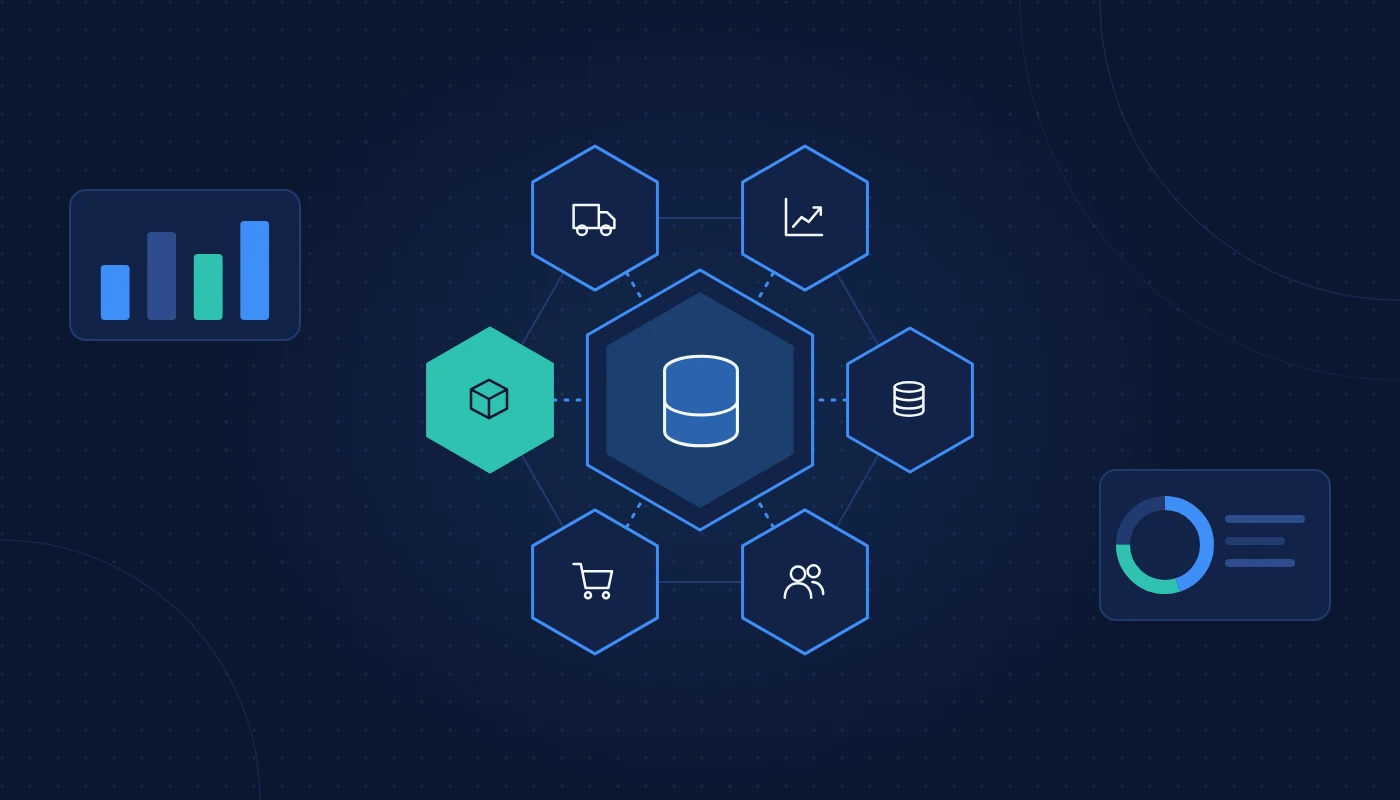
ERP (Enterprise Resource Planning) is business software that runs your core operations — finance, purchasing, sales, inventory, HR, manufacturing and more — on one shared database, so every department works from the same numbers.
SAP is a German software company, founded in 1972 and headquartered in Walldorf, that is one of the largest ERP vendors in the world. “SAP” is also the name people loosely use for SAP’s ERP products.
That is the heart of it. ERP is the category, in the same way that “smartphone” is a category. SAP is a vendor, in the same way that a particular phone manufacturer is a vendor. Saying “SAP vs ERP” is a little like saying “a specific phone brand vs smartphones”.
Where the term ERP came from
The phrase “ERP” became popular in the early 1990s, building on earlier MRP (Material Requirements Planning) systems used by manufacturers to plan materials and production. As those systems grew to include accounting, sales and HR, the industry needed a broader name. “Enterprise Resource Planning” stuck, even though modern ERP is used just as often by a trading company in Downtown Cairo or a services firm in a free zone as by a factory.
What an ERP actually does day to day
In practical terms, an ERP replaces the patchwork of spreadsheets, a standalone accounting package, a separate stock file and an HR tool that many growing Egyptian businesses run on. When a salesperson raises an invoice, stock reduces automatically, the receivable appears in finance, the VAT is calculated at 14% where applicable, and management sees it on a dashboard — without anyone re-typing data.
Typical ERP modules include:
- Finance and accounting: general ledger, payables, receivables, bank reconciliation, VAT returns and Corporate Tax support
- Sales and CRM: quotations, orders, invoicing, customer history
- Purchasing: requisitions, purchase orders, supplier bills
- Inventory and warehousing: stock levels, batches, serial numbers, multiple warehouses
- Manufacturing: bills of materials, work orders, costing
- HR and payroll: employee records, leave, WPS salary files, end-of-service gratuity
- Reporting: consolidated views across branches and entities
If you want a broader view of how these platforms are deployed locally, our page on ERP software in Egypt covers the main options and how they are rolled out.
Is SAP an ERP?
Yes — but with a nuance. Asking “is SAP an ERP” is a bit like asking “is Microsoft a spreadsheet?”. SAP is a company. It sells ERP software, and its ERP products are among the most widely used in the world. But SAP also sells many products that are not ERP: analytics, procurement networks, HR cloud suites, customer experience tools, integration platforms and more.
So when someone in your organisation says “we run SAP”, it is worth asking which SAP product they mean. A multinational’s regional office in Cairo might run SAP S/4HANA connected to its global headquarters. A 30-person distributor in Giza might run SAP Business One. Both say “we use SAP”, but the products are very different in scale, implementation approach and day-to-day experience.
SAP vs ERP: why the comparison is a category mistake
Search for “sap vs erp” and you will find plenty of articles that compare the two as if they were rivals. They are not. The useful comparison is not SAP against ERP; it is SAP’s ERP products against other vendors’ ERP products, such as Microsoft, Oracle or Odoo.
Here is a simple way to lay out the difference between ERP and SAP:
| Question | ERP | SAP |
|---|---|---|
| What is it? | A category of business software | A software company (and shorthand for its products) |
| Who makes it? | Many vendors: SAP, Oracle, Microsoft, Odoo, Infor, Sage and others | SAP SE, Germany |
| Is it one product? | No — thousands of products fit the category | No — SAP sells several ERP products plus many non-ERP tools |
| Who is it for? | Any organisation that wants integrated operations | Depends on the product: S/4HANA for large enterprises, Business One for SMEs |
| Can you buy “an ERP” without SAP? | Yes | — |
| Can you buy SAP without ERP? | — | Yes, e.g. SAP analytics or HR cloud products on their own |
Once you see it this way, the real buying questions become clearer: which ERP fits our size, industry and budget model, and is an SAP product the right one among those options?
The SAP ERP product family, explained
SAP has released several generations of ERP over five decades. For Egyptian buyers, three names come up most often: SAP ERP ECC, SAP S/4HANA and SAP Business One. A fourth, SAP Business ByDesign, appears occasionally for mid-sized subsidiaries.
SAP ERP ECC: the classic system
SAP ERP ECC (ERP Central Component) is the system most large companies implemented from the mid-2000s onwards. Technically its latest release is SAP ERP 6.0 with enhancement packages. ECC is powerful, extremely configurable and deeply embedded in thousands of large organisations — including many government-linked entities, oil and gas firms and conglomerates across the Gulf.
ECC can run on several third-party databases (such as Oracle, Microsoft SQL Server or IBM Db2), which is one of the key technical differences from its successor. It has a reputation for a dated user interface (the classic SAP GUI), heavy customisation through ABAP code, and long implementation projects.
SAP S/4HANA: the current generation
SAP S/4HANA, launched in 2015, is SAP’s current flagship ERP for large enterprises. It runs only on SAP’s own in-memory database, HANA, which allows much faster reporting and real-time analytics on transactional data. It also brings a simplified data model and the browser-based Fiori user experience.
S/4HANA is available in several deployment models — on-premise, private cloud and public cloud editions — and SAP has been steering customers towards its cloud offerings through programmes such as RISE with SAP and GROW with SAP.
SAP Business One: ERP for small and mid-sized businesses
SAP Business One (often shortened to SAP B1) is a completely separate product designed for small and mid-sized companies. It is not a “lite” version of S/4HANA; it has its own codebase, its own partner ecosystem and a much shorter implementation cycle. It covers finance, sales, purchasing, inventory, basic production and reporting, and it can run on Microsoft SQL Server or SAP HANA.
In Egypt, SAP Business One is popular with traders, distributors and light manufacturers who want a recognised brand and strong inventory control without the scale of an enterprise rollout. If that is the bracket you are in, our overview of SAP Business One explains the modules and how it is usually configured for VAT and multi-currency trading.
SAP Business ByDesign
Business ByDesign is a cloud ERP aimed at mid-sized companies and subsidiaries of larger groups. It is less common in the Egyptian SME market than Business One, but it is occasionally chosen by regional offices that need a cloud system aligned with a parent company’s SAP landscape.
SAP S/4HANA vs ECC: what changed
For organisations already on SAP, the most pressing question is SAP S/4HANA vs ECC. Moving from one to the other is not a simple upgrade; it is closer to a re-implementation, especially if the ECC system has years of custom code.
| Area | SAP ECC | SAP S/4HANA |
|---|---|---|
| Database | Several third-party databases supported | SAP HANA only |
| Data model | Many aggregate and index tables | Simplified model (e.g. Universal Journal in finance) |
| User interface | SAP GUI, largely transaction-code driven | SAP Fiori apps in the browser, plus GUI |
| Reporting | Often relies on a separate data warehouse | Real-time analytics on live data |
| Deployment | Mostly on-premise or hosted | On-premise, private cloud and public cloud editions |
| Customisation | Heavy ABAP modifications common | “Clean core” approach encouraged, extensions kept separate |
| Support horizon | Mainstream maintenance ending (see below) | SAP’s strategic product going forward |
The ECC maintenance deadline
SAP has announced that mainstream maintenance for SAP ERP 6.0 (ECC) with the most recent enhancement packages ends at the end of 2027, with an optional extended maintenance period available until the end of 2030 at additional commercial terms. SAP has also described a customer-specific maintenance phase after that, and transition options for some customers moving through its cloud programmes.
For Egyptian organisations still on ECC, this means planning should already be well underway. A typical decision path looks like this:
- Assess how much custom code and how many interfaces you have.
- Choose an approach: a “greenfield” re-implementation, a “brownfield” system conversion, or a selective data transition.
- Decide on deployment: on-premise on your own servers, private cloud, or public cloud — keeping Egyptian data residency requirements in mind if you are in a regulated sector.
- Clean your data before you move it.
- Plan for e-invoicing, because Egypt’s Peppol-based e-invoicing rollout overlaps with many migration timelines.
Some organisations use the deadline as a moment to step back and ask whether S/4HANA is still the right fit at all — especially regional subsidiaries whose needs are closer to a mid-market system.
Why the confusion matters for Egyptian businesses
The ERP and SAP mix-up is not just a vocabulary issue. We regularly see it lead to real decisions being made on the wrong basis.
Scenario 1: the trading company that asked for “an SAP quote”
A 45-person electronics trading company in 10th of Ramadan City asked for “an SAP quotation” because its new finance manager had used SAP at a previous employer. After a short requirements workshop, it turned out that the company needed strong landed-cost calculation, serial-number tracking, multi-currency purchasing and VAT returns — all of which several mid-market ERPs handle well. SAP Business One was one valid option, but so were two others. Starting with the requirement rather than the brand gave the owners a genuine comparison.
Scenario 2: the regional office on a parent company’s ECC
A Cairo-based regional office of a European manufacturer ran its finance on the parent’s SAP ECC instance. Local VAT reporting, bilingual invoices and the upcoming Egyptian e-invoicing requirements were handled through spreadsheets and manual workarounds. Here, the question was not “ERP or SAP” but “how does our local entity stay compliant while the group plans its S/4HANA move?” — a very different conversation involving integration, interim tools and timelines.
Scenario 3: the start-up told it “needs SAP to look serious”
A fast-growing free zone e-commerce start-up was advised by an investor that “serious companies run SAP”. With fewer than 20 staff and a heavy dependence on online sales channels, it needed a flexible system with good e-commerce connectors and quick configuration. An enterprise SAP project would have been overkill; a cloud ERP sized to its stage was the sensible choice, with a plan to revisit in three to five years.
SAP alternatives Egyptian businesses usually compare
Because SAP is one vendor among many, most selection processes in the Egyptian compare SAP with three to five other platforms. Each has its own strengths, and the right one depends on your size, industry, IT capability and how you prefer to license software.
Odoo
Odoo is an open-core ERP with a very broad set of modules — accounting, inventory, CRM, e-commerce, manufacturing, HR and more — and a flexible, modern interface. It is popular with SMEs and mid-sized companies in Egypt that want one system covering a lot of ground. If you are weighing it directly against SAP’s SME product, see our comparison of Odoo vs SAP Business One.
Oracle NetSuite
Oracle NetSuite is a cloud-only ERP that is strong in multi-entity consolidation, subscription billing and financial reporting. It is often chosen by fast-growing companies with operations in several countries, or by subsidiaries of US-headquartered groups. Licensing is subscription-based with modules and user types priced separately, so scoping matters.
Microsoft Dynamics 365
Microsoft offers two main ERP lines: Dynamics 365 Business Central for small and mid-sized companies, and Dynamics 365 Finance and Supply Chain Management for larger enterprises. Organisations already invested in Microsoft 365, Teams and Power BI often find the integration attractive. You can read more about Microsoft Dynamics 365 in Cairo and how Business Central is localised for Egypt VAT.
How licensing and cost models differ (without the numbers)
We do not publish figures in articles because they vary widely with users, modules and scope. What does vary between vendors is the model:
- Subscription (SaaS): per user per month or year, sometimes with different user types (full, limited, self-service).
- Perpetual licence plus annual maintenance: an upfront licence with a yearly maintenance percentage; still available for some on-premise products.
- Open-core: a free community edition with a paid enterprise edition that adds features and support.
- Implementation and support: usually the larger long-term cost factor, driven by the number of processes, integrations, data migration and customisation.
Cost factors you should list before talking to any vendor include the number of users by role, number of legal entities, number of warehouses or branches, integrations (e-commerce, POS, banks, e-invoicing provider), data migration scope, and Arabic or bilingual document requirements.
How to decide whether SAP is right for you
If you are trying to work out whether an SAP product belongs on your shortlist, these questions will help:
- How big and complex are you? Large, multi-country groups with complex manufacturing or supply chains are S/4HANA territory. SMEs and mid-sized traders are more likely to compare SAP Business One with Odoo, Business Central and NetSuite.
- Does a parent company mandate a platform? If your group runs SAP globally, alignment may matter more than local preference.
- What skills are available? Consider the local partner ecosystem and whether you can support the system after go-live.
- How much customisation do you really need? The more unique your processes, the more important flexibility and integration tools become.
- What are your compliance timelines? Egyptian e-invoicing, Corporate Tax record-keeping and VAT reporting all need to work from day one.
An independent requirements review is often the fastest way to cut through vendor marketing. Our ERP consultants run short discovery workshops that map your processes first, then match them to two or three realistic platforms — whether that includes SAP or not.
For a deeper look at the selection process itself, our buyer’s guide on how to choose ERP software in Egypt walks through requirements, demos and scoring. If you are a smaller firm leaning towards cloud, the cloud ERP for small business guide is a good companion read.
Common myths about ERP and SAP
“ERP means SAP.” No. SAP is one ERP vendor. There are many others, and for many Egypt SMEs a non-SAP system is the better fit.
“SAP is only for huge companies.” Partly true for S/4HANA, but SAP Business One is built specifically for small and mid-sized businesses.
“Moving from ECC to S/4HANA is just an upgrade.” It is a significant project involving database change, data model changes, custom code remediation and user retraining.
“Any ERP is VAT-compliant out of the box.” Most mainstream ERPs support Egypt VAT, but your configuration — tax codes, reverse charge, bilingual tax invoices and the return layout — still has to be set up correctly. The ETA does not “approve” accounting software; it is your configuration and records that need to meet the requirements.
Frequently asked questions
What is the difference between ERP and SAP?
ERP is a category of business software that integrates finance, sales, inventory, HR and other functions on one database. SAP is a company that sells ERP products, such as SAP S/4HANA and SAP Business One. All SAP ERP products are ERPs, but not all ERPs are SAP.
Is SAP an ERP or a company?
Both, depending on context. SAP SE is a German software company. In everyday conversation, “SAP” is also used as shorthand for its ERP products. Strictly speaking, SAP makes ERPs rather than being one.
What is SAP ERP ECC?
SAP ERP ECC (ERP Central Component) is SAP’s previous-generation enterprise ERP, widely implemented from the mid-2000s. Its latest release is SAP ERP 6.0 with enhancement packages. It is being succeeded by SAP S/4HANA, and its mainstream maintenance is scheduled to end at the end of 2027.
SAP S/4HANA vs ECC: do I have to move?
Not immediately, but you need a plan. Once mainstream maintenance ends, staying on ECC means paying for extended support, accepting reduced support, or moving to third-party support. Most organisations either convert to S/4HANA or use the moment to re-evaluate their ERP choice entirely.
Is SAP Business One the same as S/4HANA?
No. SAP Business One is a separate product built for small and mid-sized businesses, with its own codebase and partner network. S/4HANA is SAP’s enterprise ERP for large organisations.
Which is better for an Egypt SME: SAP or another ERP?
It depends on your processes, growth plans and how you want to license and support the system. Many Egypt SMEs compare SAP Business One with Odoo, Microsoft Dynamics 365 Business Central and Oracle NetSuite. The best choice comes from mapping your requirements first, not from the brand name.
Conclusion: ERP is the category, SAP is one choice within it
So, what is ERP and SAP? ERP is the type of software that ties your business together on one set of data. SAP is one of the world’s biggest makers of that software, with products ranging from enterprise S/4HANA to SME-focused Business One. Understanding the difference stops you comparing the wrong things, helps you read vendor proposals critically and puts your own requirements — VAT, e-invoicing, inventory, payroll, growth — at the centre of the decision.
If you are on SAP ECC, start your transition planning now. If you are choosing your first ERP, shortlist on fit rather than reputation. For more articles like this, browse our ERP blog.