
ERP guide
How to Choose the Best ERP Software in Egypt: A 2026 Buyer’s Guide
In this guide
- Why there is no single best ERP software in Egypt
- Signs you have outgrown your current system
- What an ERP system in Egypt must handle
- A simple ERP requirements template
- Top 10 ERP software in Egyptian worth shortlisting
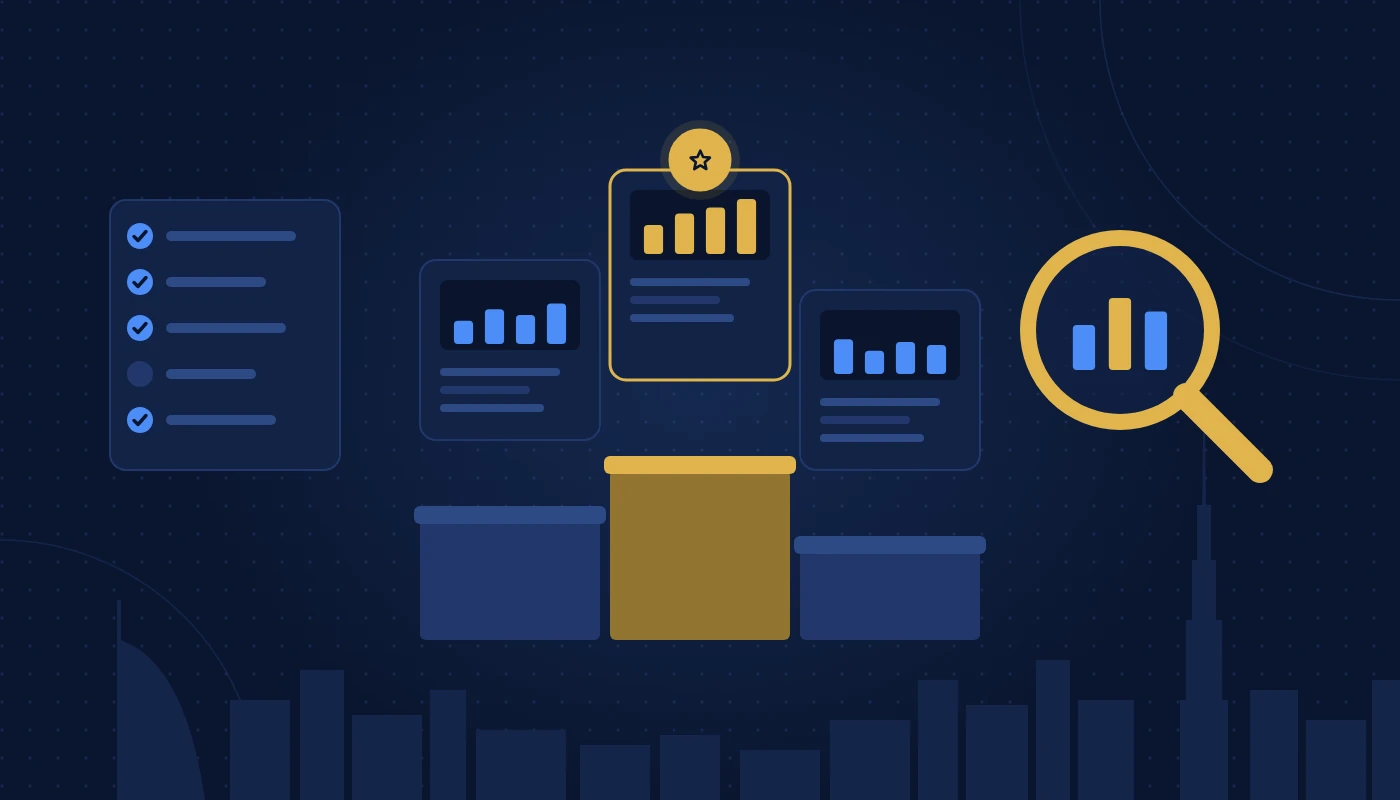
- Building a scoring matrix
- Running demos that reveal the truth
- Understanding cost models without the sales pitch
- Choosing the best ERP software solution provider in Cairo
- ERP selection checklist
- Common mistakes
- FAQ
- Conclusion
Searching for the best ERP software in Egyptian usually produces a long list of brand names and very little guidance on how to decide between them. The right choice depends on your industry, size, growth plans, tax obligations and the quality of the partner who implements it. This buyer’s guide gives you a repeatable method: define requirements, build a scoring matrix, shortlist platforms, test them properly and choose a provider you can work with for years.
Key takeaways
- Start with your processes and pain points, not with vendor demos.
- Any ERP system in Egypt must handle 14% VAT, Corporate Tax records and the e-invoicing mandate that begins in 2027.
- Shortlist three platforms at most and score them against weighted criteria, not gut feel.
- The implementation partner matters as much as the software; assess both separately.
- Insist on scripted demos using your own scenarios, and speak to reference customers in your sector.
- Compare licensing and cost models (subscription, perpetual, per-user, per-module) rather than headline numbers.
Why there is no single best ERP software in Egypt
A 15-person spare-parts trader in Downtown Cairo and a 400-person contractor in Alexandria need very different things. The trader wants fast invoicing, stock visibility and credit control. The contractor needs job costing, progress billing, retention tracking and subcontractor management. A platform that is perfect for one may be overkill or underpowered for the other.
So “best” really means “best fit”. That fit is decided by five factors:
- Process fit: how much of your core work the system handles without customisation.
- Scale fit: whether it suits your user count, transaction volumes and number of entities today and in five years.
- Compliance fit: Egypt VAT, Corporate Tax, e-invoicing and Arabic document support.
- Ecosystem fit: the availability of skilled local partners, add-ons and integrations.
- Ownership fit: the total effort to run, support and upgrade the system over its life.
If you keep these five in front of you, vendor marketing becomes much easier to filter.
Signs you have outgrown your current system
Before choosing anything, confirm you actually need an ERP. Typical signals in Egyptian businesses include:
- Month-end close takes more than a week because data lives in several spreadsheets.
- Sales staff cannot see real stock levels before promising delivery.
- VAT return preparation involves manual adjustments and exports.
- Managers approve purchases by email or WhatsApp with no audit trail.
- Opening a second branch, warehouse or free zone entity means duplicating work.
- You cannot answer “which customers or products are actually profitable?” without a week of analysis.
If three or more of these sound familiar, an ERP is likely justified. If only one does, a better accounting package or an add-on may be enough.
What an ERP system in Egypt must handle
Whatever platform you choose, an ERP system in Egypt should cover these local requirements as standard or through a well-supported localisation.
Tax and compliance
- VAT: standard (14%), zero-rated, exempt and out-of-scope supplies; reverse charge on imports; compliant tax invoices and credit notes; a VAT return report that maps to the ETA form.
- Corporate Tax: clean financial statements, tagging of non-deductible expenses and related-party transactions, and audit-ready records retained for the required period.
- E-invoicing: Egypt’s Peppol-based “5-corner” model via Accredited Service Providers (ASPs). B2B and B2G invoices are in scope; B2C is excluded for now. Businesses with revenue of EGP 50 million or more appoint an ASP by 30 October 2026 and go live on 1 January 2027; others appoint by 31 March 2027 and go live on 1 July 2027; government entities go live on 1 October 2027.
Ask every vendor exactly how their product will produce structured e-invoices and connect to an ASP, and whether that is native, partner-built or still on a roadmap. Our page on e invoicing software Egypt explains what “ready” should mean in practice.
Local business realities
- Bilingual (English and Arabic) printed documents and, ideally, an Arabic user interface.
- Multi-company and intercompany for free zone and mainland entities.
- Multi-currency purchasing and sales, with landed cost allocation for importers.
- Post-dated cheque management, still common in Egyptian trade and real estate.
- Integration with payroll and WPS processes, either inside the ERP or via a connector.
- Data hosting options that respect any sector rules or customer contracts on data residency.
A simple ERP requirements template
You do not need a 200-page tender document. A focused ERP requirements template, built in a spreadsheet, is enough for most SMEs and mid-market firms. Use one row per requirement and these columns:
| Column | What to write | Example |
|---|---|---|
| ID | Unique reference | FIN-07 |
| Area | Department or process | Finance – receivables |
| Requirement | Plain-English description | Track post-dated cheques by due date and bank |
| Priority | Must / Should / Could | Must |
| Current method | How it is done today | Excel register, reconciled monthly |
| Volume | Frequency or quantity | About 300 cheques a month |
| Owner | Person who can explain it | Credit controller |
| Vendor response | Standard / configuration / customisation / not possible | (to be completed by vendor) |
| Notes | Edge cases or dependencies | Must link to customer statement |
Group requirements by area: finance, sales, purchasing, inventory, manufacturing or projects, HR and payroll, reporting, integration and technical. Keep “Must” items to the genuinely critical ones; if everything is a must, nothing is.
Send the same template to every shortlisted vendor and ask them to complete the “Vendor response” column honestly. Any “standard” answer should later be proven in a demo.
Top 10 ERP software in Egyptian worth shortlisting
Lists of the top 10 ERP software in Egyptian vary depending on who writes them. The table below is not a ranking; it summarises platforms commonly considered by Egyptian businesses and the profile each tends to suit. Editions and features change frequently, so verify current capabilities with the vendor.
| Platform | Typical fit | Deployment | Points to check |
|---|---|---|---|
| Odoo | SMEs to mid-market wanting broad modules and flexibility | Cloud or self-hosted | Community vs Enterprise features; partner quality; custom code and upgrades |
| Microsoft Dynamics 365 Business Central | SMEs to mid-market already using Microsoft 365 | Cloud (on-premises options exist) | Localisation app for Egypt; add-ons for industry needs |
| Microsoft Dynamics 365 Finance & Supply Chain | Larger enterprises and complex groups | Cloud | Implementation scale and internal capacity required |
| SAP Business One | Small and mid-sized firms, especially traders and distributors | On-premises or partner-hosted cloud | Add-on ecosystem; reporting tools; partner depth |
| SAP S/4HANA Cloud | Large enterprises and fast-growing groups | Cloud | Programme size; change management |
| Oracle NetSuite | Multi-entity, multi-currency and fast-scaling businesses | Cloud (SaaS) | Local tax configuration; customisation approach |
| Zoho Books / Zoho One | Small businesses and startups | Cloud | Depth of inventory and manufacturing; integration between apps |
| Sage (e.g. Sage X3) | Mid-market manufacturing and distribution | Cloud or on-premises | Local partner coverage |
| Acumatica | Mid-market firms wanting cloud ERP with flexible user models | Cloud | Egyptian partner availability |
| Regional ERPs (e.g. Focus, Tally-based solutions) | Traders and SMEs wanting familiar, locally supported tools | On-premises or cloud | Scalability; integration options; long-term roadmap |
A closer look at the most common shortlist
In practice, most Egypt SME and mid-market shortlists end up with two or three of the following:
- Odoo is popular for its breadth (accounting, inventory, CRM, manufacturing, HR, website and more in one platform) and its modular rollout. Our Odoo Egypt page covers the platform in more depth.
- Dynamics 365 Business Central appeals to businesses that live in Outlook, Excel and Teams and want tight Microsoft integration.
- SAP Business One is a long-standing choice for trading and distribution companies that want a mature, structured product.
- Oracle NetSuite suits groups with several entities and currencies that want a pure SaaS model with consolidated reporting.
If two of these are on your list, a head-to-head view helps. See our Odoo vs SAP Business One comparison, or browse the full ERP comparison hub.
Building a scoring matrix
A scoring matrix turns opinions into a decision you can defend to your board or partners.
Step 1: Agree criteria and weights
Pick six to eight criteria and give each a weight that adds up to 100. A typical Egyptian mid-market set looks like this:
| Criterion | Example weight |
|---|---|
| Functional fit to “Must” requirements | 30 |
| Egyptian compliance (VAT, Corporate Tax, e-invoicing, Arabic) | 15 |
| Usability for your actual users | 15 |
| Implementation partner capability | 15 |
| Integration and reporting | 10 |
| Scalability and roadmap | 10 |
| Total cost of ownership model | 5 |
Adjust the weights to your situation. A fast-growing distributor might weight scalability higher; a firm with a non-technical team might weight usability higher.
Step 2: Score consistently
Score each platform from 1 to 5 against each criterion, then multiply by the weight. Have at least three people score independently (for example finance, operations and IT) and discuss big differences rather than averaging them away.
Step 3: Sense-check the winner
If the top-scoring option feels wrong, look at why. Sometimes the matrix is missing a criterion that matters, such as a specific industry feature. Fix the matrix, not the score.
Running demos that reveal the truth
Generic demos are designed to impress. Scripted demos are designed to inform.
Write your own demo scripts
Give each vendor three to five scenarios from your business, at least a week in advance. For example: “Import a container from China in USD with freight and duty, receive it into two warehouses, allocate landed costs and sell to a VAT-registered customer in Alexandria with an Arabic tax invoice.”
Watch for warning signs
- Switching to slides when the scenario becomes difficult.
- “That’s on the roadmap” for a must-have requirement.
- Heavy use of a demo database that hides how setup actually works.
- Different consultants promising different things.
Speak to references
Ask for two Egyptian references of a similar size and industry, and ask them what went wrong, not only what went right. A reference who admits problems and explains how they were solved is far more useful than a glowing testimonial.
Understanding cost models without the sales pitch
We do not quote figures here, because what you pay depends on users, modules, hosting and scope. What you can compare are the cost models and factors.
Licensing models
- Subscription (SaaS): a recurring fee, usually per user or per user tier, sometimes with module add-ons. Hosting and upgrades are typically included.
- Perpetual licence: a one-off licence plus an annual maintenance or enhancement fee for updates and support.
- Open-source or community editions: no licence fee, but you carry hosting, support and some functional limits.
Cost factors beyond the licence
- Implementation services (analysis, configuration, testing, training).
- Data migration effort.
- Customisations and integrations.
- Hosting and infrastructure if not SaaS.
- Ongoing support, upgrades and new requirements.
- Internal staff time, often the most underestimated item.
Ask every vendor to break their proposal down into these headings so you can compare like with like across a five-year horizon.
Choosing the best ERP software solution provider in Cairo
Many failed projects used good software and the wrong partner. When you look for the best ERP software solution provider in Cairo, evaluate the provider as carefully as the platform.
What good providers do
- Start with a discovery or ERP consulting services phase before fixing scope and price.
- Explain their methodology, phase gates and how they handle change requests.
- Name the consultants who will work on your project and share their experience.
- Include data migration, training and post-go-live support clearly in scope.
- Show Egyptian references in your industry and let you call them.
- Advise against customisations you do not need.
Questions to ask every provider
- How many projects of our size and industry have you delivered in Egypt?
- Who will be our day-to-day consultant, and are they in-house or subcontracted?
- How do you configure VAT and prepare for e-invoicing on this platform?
- What is your support model after go-live, and what response times do you commit to?
- What partner status do you hold with the vendor, and can we verify it?
Red flags
- A fixed price before anyone has understood your processes.
- “Everything is standard” for a complex operation.
- No clear owner for data migration.
- Pressure to sign before a quarter-end “discount deadline”.
- Reluctance to provide references or a sample project plan.
Look for ERP implementation services that cover the whole life cycle, not just configuration. Once you have chosen, our ERP implementation guide shows how to run the project itself.
ERP selection checklist
Use this ERP selection checklist to keep your evaluation honest and complete.
- ☐ Business case written: problems to solve and measurable goals
- ☐ Selection team formed with finance, operations and IT represented
- ☐ Requirements captured in a template and prioritised (Must / Should / Could)
- ☐ Long list reduced to a shortlist of no more than three platforms
- ☐ Weighted scoring matrix agreed before demos start
- ☐ Scripted demo scenarios sent to each vendor in advance
- ☐ VAT, Corporate Tax and e-invoicing approach confirmed in writing
- ☐ Arabic documents and multi-entity requirements demonstrated, not just promised
- ☐ Integration needs (bank, e-commerce, payroll, logistics) reviewed with each vendor
- ☐ Two or more Egyptian reference calls completed per finalist
- ☐ Five-year cost model compared on the same headings
- ☐ Contract reviewed for scope, change control, data ownership and exit terms
- ☐ Implementation plan, team and support model agreed before signing
Common mistakes
- Choosing by brand recognition. A big name does not guarantee a good fit for a 30-person company.
- Letting one department decide. Finance-only selections often ignore warehouse and sales needs, and vice versa.
- Ignoring the partner. The same software can succeed or fail depending on who implements it.
- Underestimating internal effort. Your people will spend significant time on requirements, testing and training.
- Overlooking e-invoicing timelines. Choosing a platform without a clear ASP integration path is a risk for 2027.
- Buying for today only. A system that cannot handle your next entity, warehouse or country will need replacing sooner than expected.
Frequently asked questions
What is the best ERP software in Egypt?
There is no single best option for every business. Odoo, Dynamics 365 Business Central, SAP Business One and Oracle NetSuite are common shortlists, but the best choice depends on your industry, size, compliance needs and the partner who implements it.
What are the top 10 ERP software in Egypt?
Platforms commonly considered include Odoo, Dynamics 365 Business Central, Dynamics 365 Finance & Supply Chain, SAP Business One, SAP S/4HANA Cloud, Oracle NetSuite, Zoho, Sage, Acumatica and regional ERPs. Treat any top-10 list as a starting point, not a ranking.
How do I find the best ERP software solution provider in Cairo?
Look for Egyptian references in your industry, named consultants, a clear methodology, transparent scope covering data migration and training, and a defined support model. Avoid providers who quote fixed prices before understanding your processes.
What must an ERP system in Egyptian support?
At a minimum: VAT-compliant tax invoices and returns, Corporate Tax-ready records, a clear path to Peppol-based e-invoicing, Arabic and English documents, multi-currency and, for many groups, multi-company support for free zone and mainland entities.
What should an ERP requirements template include?
An ID, area, plain-English requirement, priority, current method, volume, owner, vendor response and notes. Keep it focused on what is genuinely important, and ask every vendor to complete the same template.
How long does ERP selection take?
For SMEs, a structured selection typically takes six to twelve weeks from requirements to contract. Larger organisations with formal tenders often take longer.
Is cloud ERP better than on-premises?
Cloud ERP reduces infrastructure work and makes upgrades easier, which suits most Egypt SMEs. On-premises or private hosting can make sense where you have specific data residency, integration or control requirements.
Conclusion
Finding the best ERP software in Egypt is a process, not a search result. Define your requirements, weight what matters, test platforms with your own scenarios and evaluate the implementation partner as seriously as the product. Build in VAT, Corporate Tax and e-invoicing from the start, and plan for the business you will be in five years’ time.
To see how different platforms map to different business profiles, explore our overview of ERP software Cairo companies are using, or browse more articles in our guides library.
Ready to build your ERP shortlist?
More ERP guides
Construction ERP Software Egypt Guide: A Contractor’s Handbook to Job Costing, Billing and Control
A practical guide to construction ERP software in Egypt: job costing, progress billing, retention, subcontractors, VAT and how to choose the right system.
Real Estate ERP Software in Egypt: Leasing, Accounting and Property Management in One System
Choose and implement real estate ERP software in Egypt: leasing, tenant and owner accounting, service charges, maintenance, CRM and Ejari-ready workflows.
VAT Compliant Accounting Software in Egypt: What It Really Means in 2026
What makes accounting software VAT compliant in Egypt: the “ETA approved” myth, tax invoice rules, Corporate Tax records and e-invoicing readiness.