
ERP guide
Construction ERP Software Egypt Guide: A Contractor’s Handbook to Job Costing, Billing and Control
In this guide
- Why generic accounting fails contractors
- Core modules of ERP software for the construction industry
- Job costing done properly
- Progress billing, variations and retention
- Subcontractor and site procurement control
- Labour, payroll and equipment
- VAT, Corporate Tax and e-invoicing for Egyptian contractors
- Construction accounting software vs full ERP
- Choosing construction ERP software Egyptian contractors can trust
- Implementation roadmap for contractors
- Common mistakes
- FAQ
- Conclusion
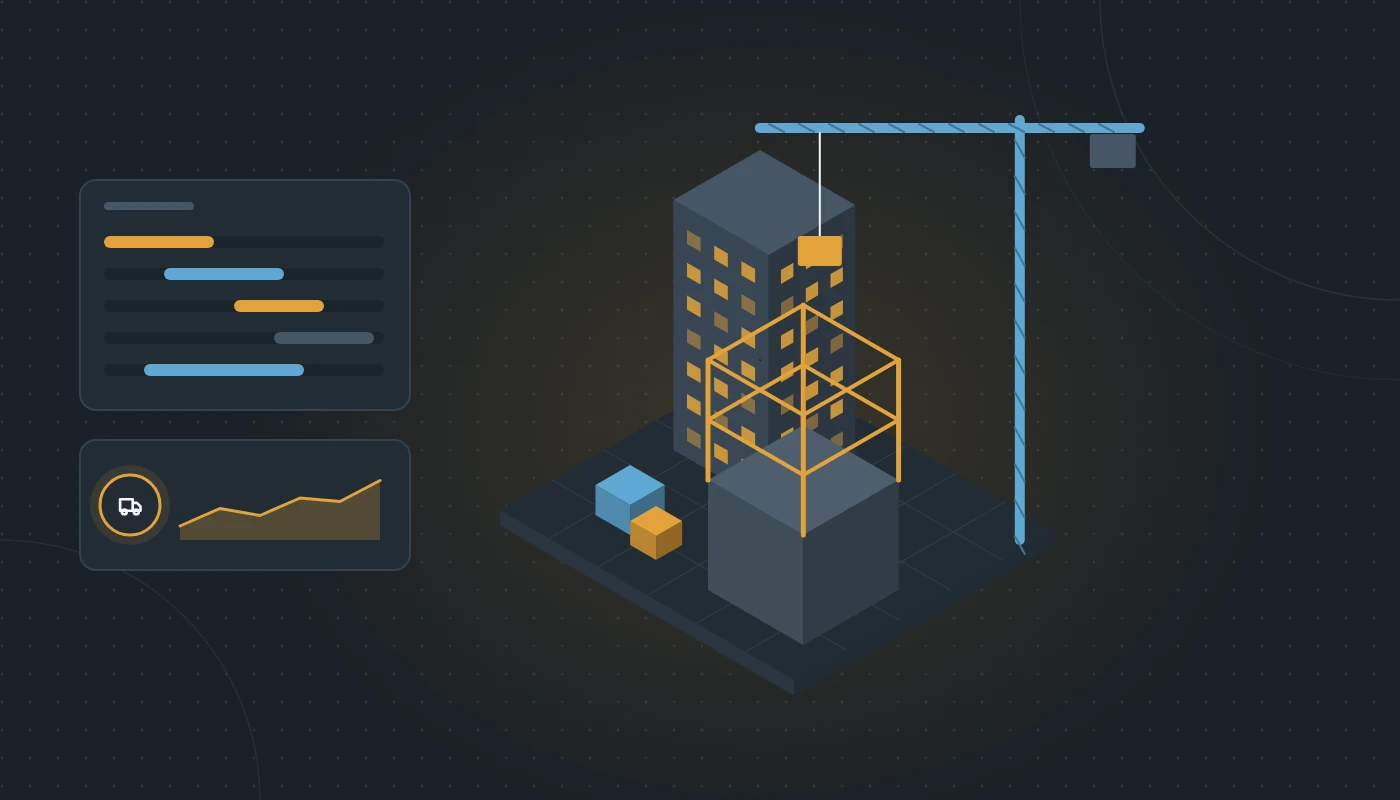
Contractors in the Egyptian often find out a project lost money only after it has finished. Costs sit in site files, subcontractor claims arrive late, and retention balances live in someone’s spreadsheet. Construction ERP software Egyptian contractors can rely on changes that by tying every cost, commitment and invoice to a project in real time.
This guide explains what construction ERP software should do, how it handles Egypt-specific issues such as VAT on progress billing and WPS for site labour, and how to choose and implement a system without disrupting live projects.
Key takeaways
- Construction ERP software links BOQ, budgets, procurement, subcontractors, labour and billing to each project, so margin is visible during the job, not after it.
- The core modules are job costing, BOQ and estimating, progress billing, retention, subcontractor management, site procurement, equipment and payroll.
- Egyptian contractors must handle VAT on interim payments and retention, Corporate Tax rules for long-term contracts and the 2027 e-invoicing mandate.
- A basic accounting package can record costs but rarely controls commitments or forecasts cost to complete.
- Implement in phases, starting with new projects rather than migrating every live job mid-stream.
Why generic accounting fails contractors
Most general accounting packages are built around a simple sequence: buy, sell, get paid. Construction does not work like that. A single project runs for months or years, is billed in stages against a contract value, involves dozens of subcontractors, and carries money held back as retention long after handover.
That is why an ERP for construction industry use needs a different spine: the project. Every purchase order, timesheet, equipment hour and invoice must carry a project and cost code, and the system must compare actuals and commitments against budget continuously.
Symptoms we see in Egyptian contracting firms
- Project managers keep their own cost trackers because finance reports arrive weeks late.
- Purchase orders are raised without checking the remaining budget for that cost code.
- Subcontractor payments are certified on paper and entered later, often twice.
- Retention receivable and payable are tracked in Excel and rarely reconciled.
- Nobody can say confidently what the cost to complete is on a live job.
If this sounds familiar, proper construction ERP software is likely to pay back through tighter cost control alone.
Core modules of ERP software for the construction industry
Good ERP software for construction industry firms covers the full project life cycle. The table below maps the modules to what they actually control.
| Module | What it controls | Typical users |
|---|---|---|
| Estimating and BOQ | Bill of quantities, rates, tender pricing, budget creation | Estimators, quantity surveyors |
| Project and job costing | Budgets by cost code, actuals, commitments, cost to complete | Project managers, finance |
| Contract billing | Interim payment applications, variations, retention, advance recovery | Commercial team, finance |
| Subcontractor management | Subcontracts, claims, certifications, back-charges, retention payable | QS, procurement |
| Procurement and site stores | Material requests, POs, deliveries to site, site stock and transfers | Site engineers, storekeepers |
| Equipment and plant | Owned and hired equipment, utilisation, fuel, maintenance, internal charging | Plant manager |
| HR, payroll and timesheets | Site labour, allocation of hours to projects, WPS salary files | HR, payroll |
| Document and quality control | Drawings, RFIs, NCRs, method statements, approvals | Document controller, QA/QC |
| Finance and reporting | General ledger, payables, receivables, cash flow, WIP and project profitability | Finance, management |
Not every contractor needs every module on day one. A fit-out company may care most about procurement and billing, while a civil contractor with a large fleet will prioritise equipment.
Job costing done properly
Job costing is the heart of any construction ERP software. Done well, it answers three questions on any day: what we budgeted, what we have spent or committed, and what we still expect to spend.
Build budgets from the BOQ
Import the BOQ into the system and structure it into cost codes (for example: substructure, superstructure, MEP, finishes, preliminaries). Each line carries a budget for material, labour, subcontract and equipment. This becomes the baseline against which everything is measured.
Track commitments, not just actuals
The most important difference between real job costing and simple cost allocation is commitments. When a purchase order or subcontract is approved, the system should immediately reduce the available budget for that cost code, even though no invoice has arrived. That is how you stop overspending before it happens.
Forecast cost to complete
Project managers should update estimated cost to complete monthly. The system then calculates the forecast final cost and margin. Comparing this month’s forecast with last month’s shows margin fade early, while there is still time to act.
Allocate overheads consistently
Site preliminaries, head office overheads and equipment charges should be allocated using agreed rules. Without consistency, project profitability reports become arguments rather than information.
Progress billing, variations and retention
Interim payment applications
Most Egyptian contracts, often based on FIDIC forms, are billed through monthly interim payment applications. The ERP should hold the contract value and BOQ, record measured progress by line or percentage, apply advance payment recovery and retention, and produce the application and the resulting tax invoice once certified.
Variations
Variations are where margin is won or lost. Track each variation from instruction to pricing, submission, approval and billing. Unapproved variations should be visible as a risk, not hidden inside the budget.
Retention receivable and payable
Retention typically sits on both sides: your client holds back part of your billing, and you hold back part of your subcontractors’ payments. The ERP should track both by project with release dates linked to practical completion and the end of the defects liability period. Reconcile them monthly; old retention balances are easy to forget and hard to recover.
Advance payments and bonds
Record advance payments received and the recovery schedule against each application. Also log performance bonds, advance payment guarantees and their expiry dates so the commercial team is alerted before renewals are due.
Subcontractor and site procurement control
Subcontract management
Each subcontract should be set up in the system with its scope, value, payment terms and retention percentage. Monthly claims are recorded, certified by the QS, and only then passed to payables. Back-charges (for example, for materials supplied or rework) are deducted at certification, creating a clear audit trail.
Material requests from site
Site engineers raise material requests against a project and cost code. Procurement converts them into purchase orders after checking budget and stock. Deliveries go straight to site or to a central yard, and the system records them against the right project.
Site stores
Larger contractors keep stock at several sites. Inter-site transfers, returns to the main store and wastage should all be recorded. A connected stock management software module makes this practical, especially for high-value items such as cable, steel and MEP fittings.
Labour, payroll and equipment
Site labour and WPS
Labour is often the largest controllable cost on an Egyptian project. Daily or weekly timesheets should record hours by employee, project and cost code, including overtime. Payroll must then produce Wage Protection System (WPS) salary files on time, handle allowances and accommodation deductions within legal limits, and accrue end-of-service gratuity.
An integrated module or connected HR software Egypt contractors use keeps labour cost per project accurate without retyping.
Equipment and plant
Record owned and hired equipment, operator assignments, fuel, maintenance and utilisation. Charging equipment to projects at an internal rate shows true project cost and highlights idle assets. Summer heat and dust are hard on plant, so preventive maintenance schedules are worth setting up from the start.
VAT, Corporate Tax and e-invoicing for Egyptian contractors
VAT on construction
Most construction services are standard-rated at 14%. The first supply of a new residential building within the time limits set by the law can be zero-rated, so contractors and developers need to apply the right treatment to each contract. Points that need careful system design include:
- Date of supply for staged billing: VAT is generally due at the earlier of the tax invoice date or payment received, so interim applications and certifications must be mapped correctly.
- Retention: how and when VAT is accounted for on retained amounts should be agreed with your tax adviser and configured consistently.
- Advance payments: VAT may be due on advance receipts.
- Designated zones: projects inside designated zones can have different treatment for goods.
Corporate Tax
Corporate Tax at 22.5% applies to taxable income above the threshold. The Corporate Tax law includes specific provisions for long-term contracts, so revenue recognition over the life of a project needs to be consistent and documented. Your ERP should support percentage-of-completion or similar methods aligned with IFRS 15, and keep records for the required retention period.
E-invoicing from 2027
Egyptian e-invoicing follows a Peppol-based “5-corner” model with Accredited Service Providers (ASPs). B2B and B2G invoices are in scope, which covers most contractor billing. Businesses with revenue of EGP 50 million or more appoint an ASP by 30 October 2026 and go live on 1 January 2027; others appoint by 31 March 2027 and go live on 1 July 2027; government entities go live on 1 October 2027.
Large contractors billing government clients need to plan for both timelines. A Egyptian e invoicing solution connected to your ERP is far easier than exporting invoices from a project spreadsheet.
Construction accounting software vs full ERP
When accounting software is enough
Small fit-out or maintenance firms with a handful of concurrent jobs can often manage with construction accounting software, or general accounting software Egypt businesses use, provided it supports project or analytic tagging, VAT and progress invoicing.
When you need ERP
Once you run several projects at once, employ your own labour, manage subcontractors and need commitment-based cost control, a full ERP becomes the better fit.
| Need | Accounting software | Construction ERP |
|---|---|---|
| Project-tagged costs | Usually yes | Yes |
| Commitment tracking against budget | Rarely | Yes |
| BOQ-based budgets | No | Yes |
| Interim payment applications with retention | Limited | Yes |
| Subcontract certification | No | Yes |
| Site stores and transfers | Limited | Yes |
| Equipment costing | No | Yes |
| Cost-to-complete forecasting | No | Yes |
What the best construction accounting software gets right
Whether you choose a dedicated product or an ERP, the best construction accounting software shares these traits: every transaction carries a project and cost code; retention is a first-class concept; billing follows the contract structure; and reports are available to project managers, not only to finance.
Choosing construction ERP software Egyptian contractors can trust
Platform options
Several routes are common for construction ERP software in Egypt:
- General ERPs with construction add-ons: platforms such as Dynamics 365 Business Central or Odoo ERP, extended with project, BOQ and contract billing modules from partners or app stores.
- Construction-specific ERPs: products built specifically for contractors, offering deep commercial features but sometimes weaker general business functions.
- Enterprise ERPs: suited to very large contractors with many entities and complex reporting.
Each route has trade-offs in depth, flexibility, local support and long-term upgrades. For a broader view of platforms, see our overview of ERP software Egypt businesses commonly choose.
Selection criteria for contractors
- Can it build budgets from your BOQ format?
- Does it track commitments and forecast cost to complete?
- Does it handle interim applications, variations, advance recovery and retention?
- Can site staff raise requests and record receipts on mobile devices?
- Does payroll integrate with timesheets and produce WPS files?
- How will it produce structured e-invoices for your ASP?
- Are Arabic documents supported for government and semi-government clients?
If you also develop or manage property, read our real estate ERP and property management guide for the leasing side. Our construction management software page covers how we approach the sector more broadly.
Implementation roadmap for contractors
Contractors cannot pause live projects to implement a new system, so the approach must be practical.
Recommended phasing
- Foundation: finance, cost codes, procurement and payables, set up for all new projects.
- Commercial: contract billing, variations, retention and subcontract certification.
- Site operations: material requests, site stores, timesheets and equipment.
- Optimisation: dashboards, cash flow forecasting and document control.
Handling live projects
Start new projects in the new system from day one. For live projects, migrate summary balances (budget, cost to date, billed to date, retention) at a cut-over date rather than every historical transaction. Projects close to completion can finish in the old system.
Implementation checklist
- ☐ Standard cost code structure agreed across all projects
- ☐ BOQ import template tested with a real tender
- ☐ Approval matrix for POs, subcontracts and variations defined
- ☐ VAT treatment for billing, retention and advances reviewed with your tax adviser
- ☐ Interim application and tax invoice formats approved, in English and Arabic where needed
- ☐ Live project balances reconciled at cut-over
- ☐ Site staff trained on mobile requests and receipts
- ☐ Timesheet to payroll to WPS flow tested end to end
- ☐ Project manager dashboards agreed and populated
For a phase-by-phase method that applies to any ERP project, see our ERP implementation guide. Working with an experienced ERP implementation company that understands contracting reduces the risk considerably.
Common mistakes
- Too many cost codes. Hundreds of codes mean nobody codes correctly. Keep the structure meaningful and consistent.
- Ignoring commitments. Reporting only actual costs gives a false sense of security.
- Letting site teams bypass the system. If materials are bought with petty cash and entered later, budget control fails.
- Treating retention as an afterthought. Unreconciled retention ties up cash and creates disputes at final account.
- Migrating every historical transaction. Summary balances are usually enough for live projects.
- Leaving VAT configuration to defaults. Construction VAT has nuances; get your tax adviser to review the setup before go-live.
Frequently asked questions
What is construction ERP software?
Construction ERP software is an integrated system that manages estimating, budgeting, procurement, subcontractors, labour, equipment, billing and accounting around individual projects, giving contractors real-time visibility of cost and margin.
Why do contractors need an ERP for construction industry use rather than standard accounting?
Construction involves long projects, staged billing, retention, variations and subcontractors. Standard accounting records costs after the fact, while a construction ERP controls commitments against budget and forecasts cost to complete.
What is the best construction accounting software for a small contractor?
For a small contractor with a few jobs, accounting software with strong project tagging, progress invoicing and VAT support may be enough. As project numbers and subcontractor volumes grow, a construction ERP usually becomes the better choice.
How does construction ERP software handle retention?
It records retention deducted on each interim application, tracks retention receivable and payable by project, and schedules release dates linked to completion and the defects liability period.
Is VAT on construction different in Egypt?
Most construction services are standard-rated at 14%, but some supplies, such as the first supply of certain new residential buildings, may be zero-rated. Staged billing, advances and retention also need careful treatment. Confirm details with a tax adviser.
Can we implement construction ERP software in the Egyptian without disrupting live projects?
Yes. Start new projects in the new system, migrate summary balances for live projects at a cut-over date and let projects near completion finish in the old system.
Does construction ERP support WPS payroll?
Many construction ERPs include payroll or integrate with HR systems that produce WPS salary files, while allocating labour hours to projects for accurate job costing.
Conclusion
The right construction ERP software Egyptian contractors choose turns project data into early warnings: overspending is blocked at the purchase order, margin fade shows up in the monthly forecast, and retention no longer disappears into spreadsheets. Combined with correct VAT setup, WPS-ready payroll and an e-invoicing path for 2027, it gives commercial and finance teams the same version of the truth.
Choose a platform that fits how you build, implement it in sensible phases, and keep it close to standard where you can. For more practical ERP guidance, visit our guides library.
Ready to bring your projects under control?
More ERP guides
Real Estate ERP Software in Egypt: Leasing, Accounting and Property Management in One System
Choose and implement real estate ERP software in Egypt: leasing, tenant and owner accounting, service charges, maintenance, CRM and Ejari-ready workflows.
VAT Compliant Accounting Software in Egypt: What It Really Means in 2026
What makes accounting software VAT compliant in Egypt: the “ETA approved” myth, tax invoice rules, Corporate Tax records and e-invoicing readiness.
HR and Payroll Software Egypt Guide: WPS, Gratuity and Compliance
A plain-English guide to HR and payroll software in Egypt: WPS salary files, end-of-service gratuity, leave rules, payroll cards and how to choose a system.